


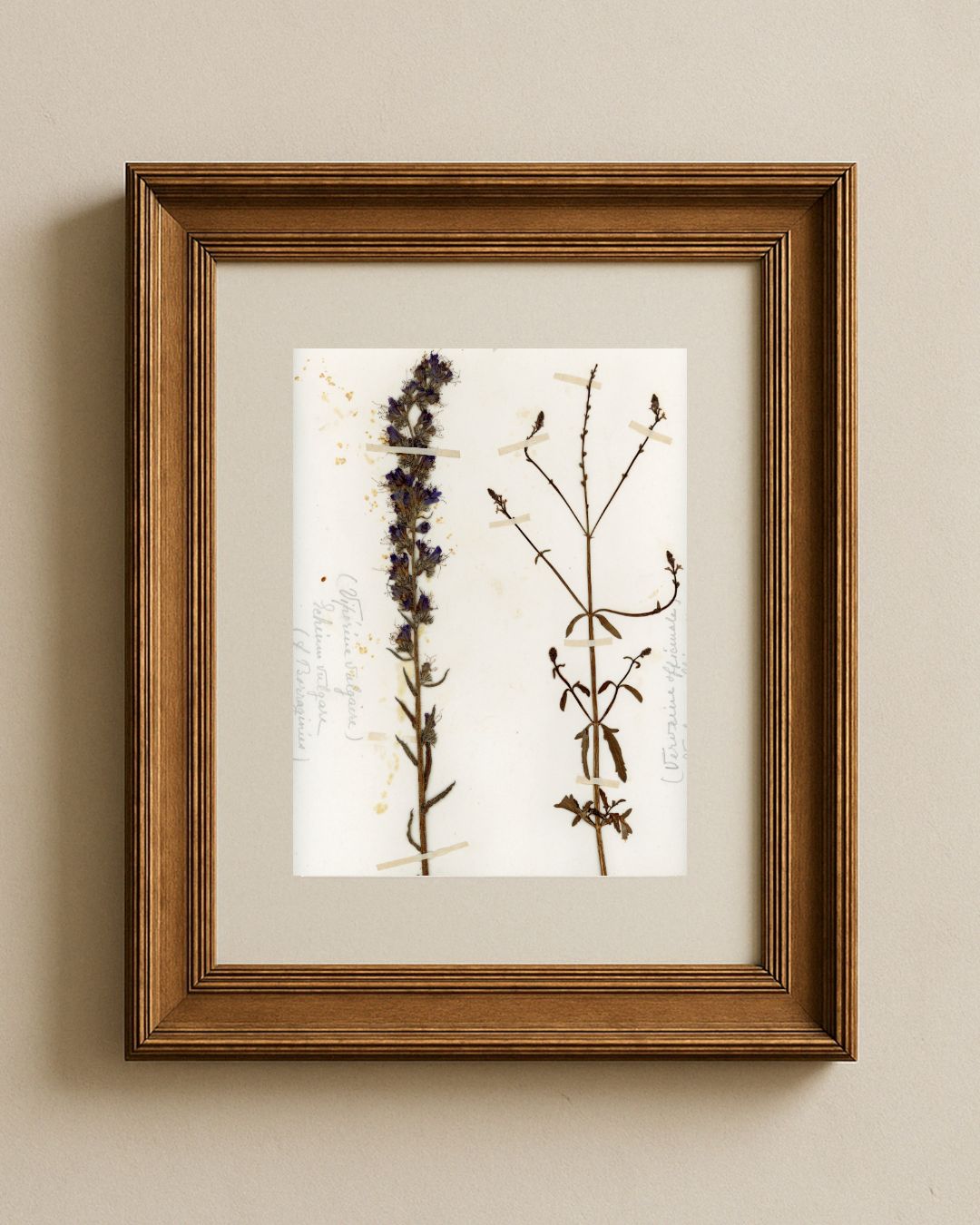

Are these original botanicals or reproductions?
Each piece in the Herbier de Provence collection is an original, vintage herbarium specimen. These are not prints or reproductions. The plants were gathered, pressed, annotated, and mounted decades ago and are preserved exactly as they were originally assembled.
Where do these herbarium specimens come from?
The Herbier de Provence collection is sourced from Gabi’s part-time home in Provence, in the south of France. The pieces reflect the region’s long tradition of botanical study and the landscape that continues to shape her work today.
Each herbarium sheet originates from historical botanical collecting practices common to the area, where plants were gathered, pressed, labeled, and preserved for study. These vintage specimens are now carefully stewarded as both scientific records and quiet works of natural history.
This regional connection is central to the collection—linking place, season, and material in a way that feels both personal and enduring.
What is the condition of these specimens?
These botanicals are preserved in their original, vintage condition. Gentle imperfections—such as fading, spotting, tape marks, or irregular edges—are part of their history and character. These signs of age are not flaws, but evidence of time, study, and care.
Are the pieces framed?
No. All herbarium sheets are sold unframed, allowing collectors to choose framing that suits their space and preservation preferences.
How should I care for my herbarium piece?
Dried botanicals are fragile. Handle with care and avoid excessive handling. For longevity, display away from direct sunlight, moisture, and humidity. Framing behind UV-protective glass is recommended for long-term preservation.
Are these pieces one-of-a-kind?
Yes. Each herbarium sheet is one-of-a-kind. Once a piece is collected, it will not be restocked or replicated.
Do you offer guidance on framing or display?
While framing services are not currently offered, general guidance is always available. You’re welcome to reach out with questions about display, grouping, or care.
A gentle framing guide can be found HERE.
Is this collection ongoing?
The Herbier de Provence collection is added to slowly, as pieces become available. Availability is limited and reflects the nature of vintage botanical preservation.